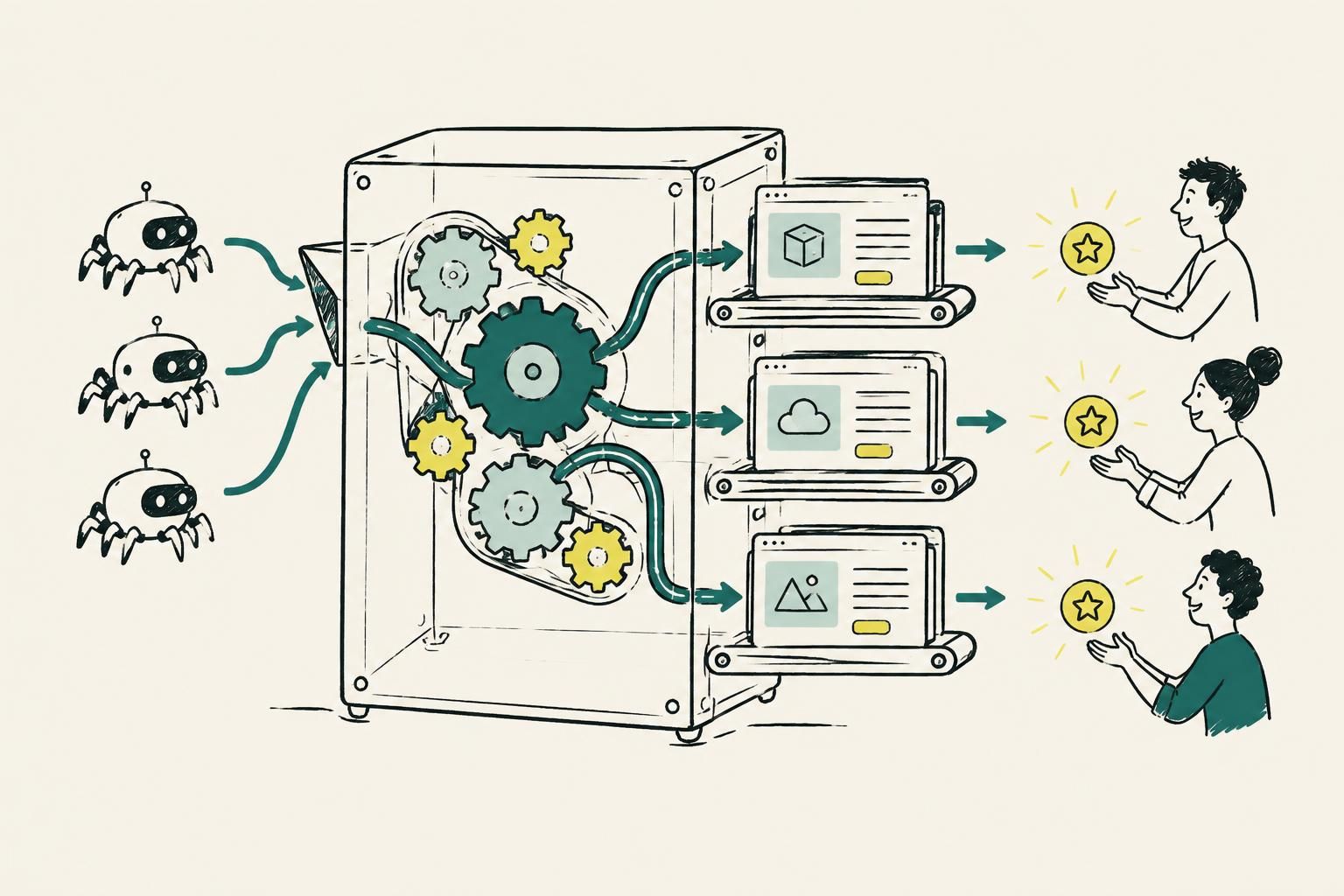
SaaS digital marketing works when every channel moves a specific buyer closer to experiencing, buying, and continuing to receive value from your product. Start with a defined customer, a clear activation event, and a small number of measurable growth loops. Add channels only when they support that system.
What is SaaS digital marketing?
SaaS digital marketing is the work of attracting, converting, activating, retaining, and expanding software customers through digital channels. It includes demand capture, such as search content and paid search, and demand creation, such as educational content, customer stories, partnerships, and communities.
The useful definition is broader than lead generation. A campaign that drives trials but leaves people unable to reach product value is incomplete. A useful SaaS marketing program connects a buyer problem to a product outcome, then measures whether that outcome leads to continued use and revenue.
Why SaaS marketing requires a different playbook than traditional marketing
Software is usually evaluated before it is fully understood. Buyers compare alternatives, ask technical and security questions, involve colleagues, and need confidence that the product fits an existing workflow. Marketing therefore has to reduce uncertainty before the sale and reinforce value after it.
The product also remains part of the marketing experience. Onboarding, in-app prompts, documentation, support, and release communication influence whether an acquired account becomes a retained customer. Treat product experience and lifecycle communication as parts of the same growth system.
The SaaS growth model: acquisition, activation, retention, and expansion
Use the funnel as a sequence of customer progress, not departmental handoffs. Acquisition gets the right people to a relevant entry point. Activation proves value. Retention confirms that value persists. Expansion follows when more people, use cases, or capacity benefit from the product.
Acquisition: create demand and capture existing demand
Capture existing demand with pages for category searches, use cases, alternatives, integrations, implementation questions, and buying criteria. Create demand by showing a problem buyers recognize but have not yet prioritized. A founder-facing example: publish a guide explaining the operational cost of manual release notes, then link to a product workflow that solves it.
Do not judge acquisition by traffic alone. Separate visitors who are researching a real problem from visitors who will never fit the product. A smaller stream of relevant visitors is more useful than a broad audience with no path to activation.
Activation: turn sign-ups into meaningful product value
Define one observable activation event. It should represent the first moment an account receives the promised value, not merely account creation. For example, a collaboration product might define activation as inviting a teammate and completing a shared task, rather than opening the dashboard.
Then build marketing and product guidance around the shortest credible route to that event. Remove unnecessary form fields, explain the first setup step on the landing page, send a focused onboarding email, and use help content that answers the exact setup questions new users encounter.
Retention and expansion: market to customers, not just leads
Retention marketing helps customers keep finding new value after the initial use case. Segment messages by product behavior, role, plan, and maturity. Send a workflow guide to accounts that completed setup but have not adopted a deeper feature. Share a relevant integration when it removes a recurring manual task.
Expansion should follow demonstrated value, not an arbitrary sales calendar. Use product adoption signals to identify accounts with a genuine reason to add seats, capacity, or another use case. Customer education, release notes, case studies, and advocacy programs all support that work.
Set the foundation before choosing channels
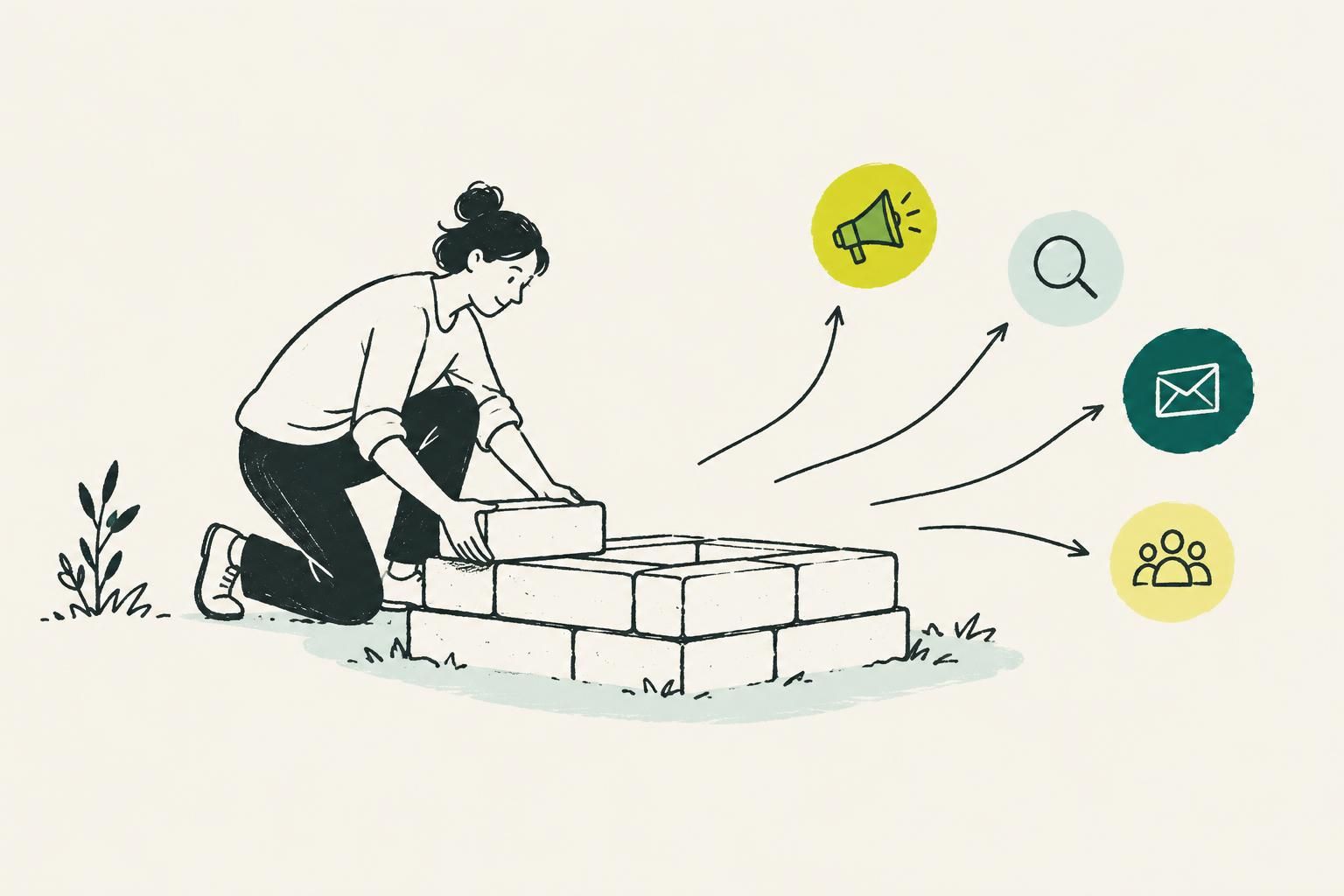
A channel cannot repair an unclear offer. Before publishing, buying ads, or recruiting affiliates, decide who has the problem, what triggers a search or purchase, what alternative they use today, and what evidence makes a switch feel safe.
Build an ICP around pains, triggers, and buying constraints
An ideal customer profile should be operational, not demographic decoration. Document the job to be done, the costly workaround, the event that makes change urgent, the person who feels the pain, the person who approves spend, and the constraints that can stop a deal.
- Pain: what is slow, risky, expensive, or hard to coordinate now?
- Trigger: what event makes the problem urgent, such as growth, a new requirement, or a failed process?
- Constraint: what must be true before purchase, such as implementation fit, approval, budget, or a required integration?
- Proof: what result, demonstration, or customer evidence reduces the perceived risk?
Map the SaaS buying journey to content and conversion paths
Map each stage to a question and a next action. Early-stage buyers need problem framing and practical education. Evaluators need comparisons, implementation detail, integrations, security answers, and pricing context where available. Ready buyers need a direct route to trial, demo, or purchase.
Make each page do one primary job. A category page can lead to a demo. A tactical guide can lead to a template or relevant product workflow. A comparison page can lead to a trial. Avoid sending every visitor to a generic homepage, where the connection between their search and your product is weaker.
Choose the right SaaS digital marketing channels for your stage
Choose channels based on the evidence you need next. An early product needs repeated buyer conversations and a fast route to learning. A product with a clear conversion path needs scalable demand capture. A mature product needs retention, expansion, and efficient category coverage alongside acquisition.
SEO and buyer-intent content for compounding demand capture
SEO earns its place when prospects already search for the problems, categories, workflows, and alternatives related to your product. Start with pages that answer evaluation questions and make the next product step obvious. Build authority through useful, specific coverage, not a high article count.
Publishing at scale without useful purpose is not a strategy. Google says generating many pages with AI without adding value for users may violate its scaled-content-abuse spam policy, while AI use itself is not the issue.
Paid search and paid social for fast learning
Use paid search to test high-intent language quickly, especially when a buyer is already looking for a solution. Use paid social to test problem framing, audiences, and creative angles when the market needs more education. Keep landing pages matched tightly to the message that earned the click.
Treat early spend as research. Compare conversion quality by query, audience, and landing-page promise. Feed winning language into product pages, sales calls, email sequences, and SEO briefs.
Email and lifecycle marketing for trial conversion and retention
Email is most effective when it responds to a customer state. A new trial user needs a short path to first value. A user who has not completed setup needs one useful next step. An active customer needs education tied to a feature, workflow, or outcome they have not yet adopted.
Write lifecycle messages as product guidance, not generic reminders. Name the task, explain why it matters, and link directly to the action. Measure activation and retained usage after the sequence, not opens alone.
Product-led growth, free tools, and templates
A free tool or template deserves investment when it solves a small but real piece of the buyer’s job and naturally reveals the need for your product. A template that helps a buyer organize a process is useful. A template that exists only to collect an email address is less likely to build trust.
Design the handoff carefully. Show the result the visitor achieved, then explain the larger workflow your product supports. Give them a relevant next step, such as saving their work, inviting a teammate, or starting a trial with their template already in mind.
Partnerships, integrations, communities, and customer advocacy
Partnerships work when both audiences share a workflow or buyer. Build co-marketing around a real integration, a joint implementation guide, or a customer problem neither product solves alone. Communities work when the team contributes expertise before asking for attention.
Customer advocacy is strongest when the customer gets recognition, useful distribution, or a chance to teach peers. Ask for a story after they have achieved a concrete outcome, then turn their language into case studies, sales enablement, and product education.
Build an SEO content engine that supports SaaS revenue
A SaaS SEO engine is a repeatable system for choosing buyer questions, publishing genuinely useful answers, connecting related pages, and improving pages after real search data arrives. The output is not a publishing calendar. It is a set of conversion paths that earns qualified demand over time.
Prioritize keywords by purchase intent, not search volume alone
Score topics using four questions: Is the searcher close to your buyer? Does the query reveal a problem your product solves? Can you create the most useful page for that query? Is there a natural next step into the product? A low-volume integration or alternative query can outrank a broad informational topic on commercial value.
Build topic groups rather than isolated posts. For example, an analytics SaaS could pair a category page with implementation guides, role-specific workflows, comparison pages, reporting templates, and integration documentation. Link these pages where the reader genuinely needs the next answer.
Create pages that help buyers evaluate software
Evaluation content should answer the difficult questions directly: who the product is for, which workflow it supports, what setup involves, what it does not solve, what alternatives exist, and how a buyer should decide. Use product screenshots, examples, definitions, implementation guidance, and evidence where you have it.
Do not rely on FAQPage markup as a dependable rich-result tactic for a commercial SaaS site. Google says FAQ rich results are now regularly shown only for well-known, authoritative government and health sites. Write FAQs because they help a buyer, not because you expect a search-result enhancement.
Use SEO for SaaS when your team needs buyer-intent content on a custom blog
SEO for SaaS fits SaaS and app founders who want done-for-you SaaS blog content without replacing a custom publishing stack. It selects topics from your site or App Store listing plus keyword data, then delivers researched, cited, fact-checked, edited buyer intent SEO articles to your domain through a review-first workflow or automatic publishing.
It is suited to teams that need API publishing for SEO content. The service supports schema markup, internal linking, sitemaps, image generation aligned to brand colors, and Google Search Console content rewrites on the same URL when a post loses clicks. It is a managed SaaS SEO content service, not a generic one-click article generator.
Create conversion paths that connect marketing to product value
Every acquisition page needs a next step that matches reader intent. Someone comparing software needs a product comparison, proof, and trial or demo path. Someone learning a workflow may need a template, checklist, or product walkthrough. Someone returning to a product page may need implementation details or an answer to a blocker.
Audit the path from first touch to activation. List the page, call to action, sign-up flow, onboarding step, activation event, and follow-up for each major audience. Find the point where qualified prospects stop. Fix that point before adding more traffic.
Measure SaaS marketing with funnel and revenue metrics
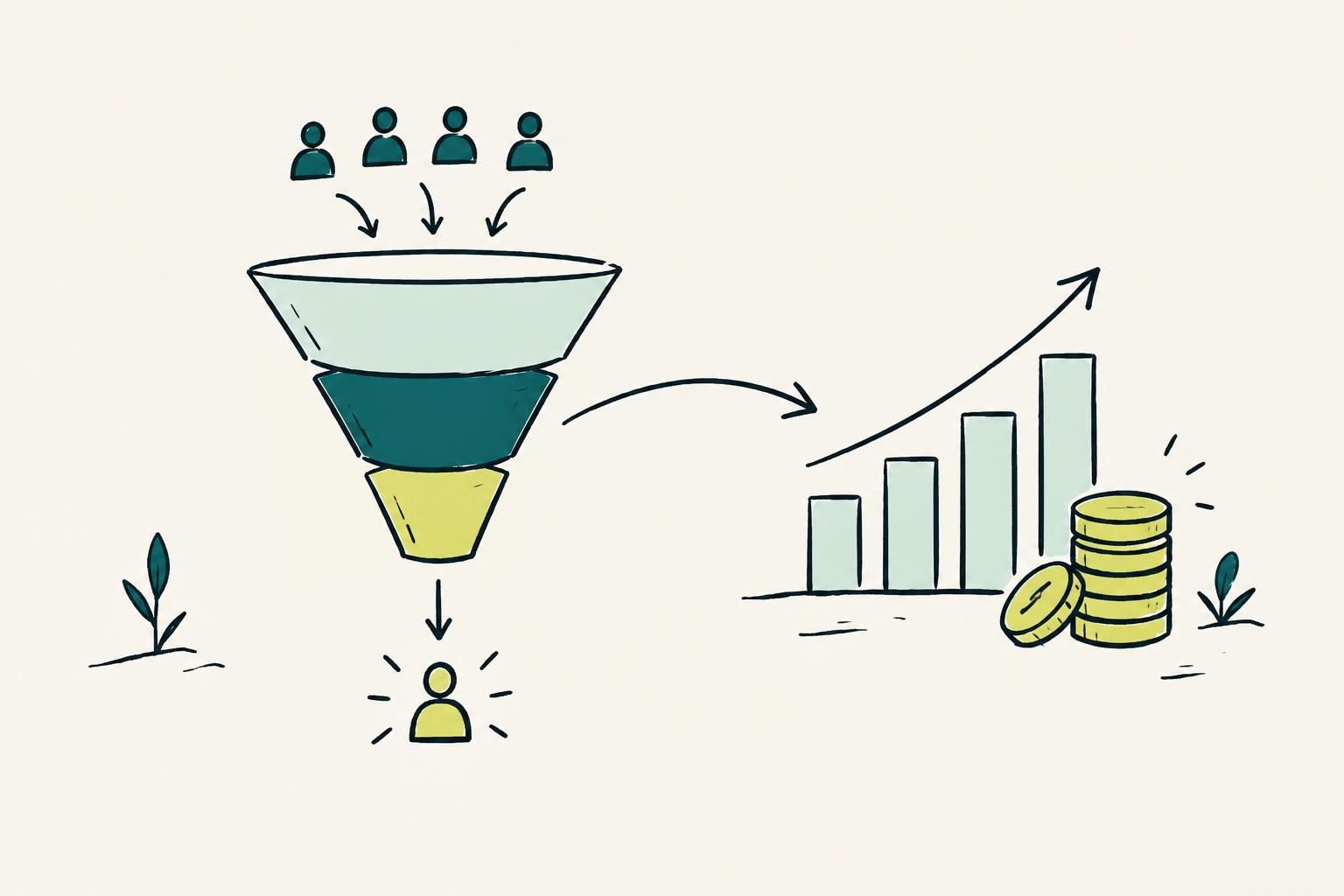
Use a small scorecard that links channel activity to customer progress. Review it by segment and acquisition source. The purpose is not to make every touchpoint perfectly attributable. It is to make better decisions about where to invest and what to improve.
Core acquisition and conversion metrics
- Qualified traffic by channel and landing page.
- Conversion from visitor to lead, trial, demo, or purchase.
- Cost per qualified lead or activated account for paid channels.
- Organic impressions, clicks, and landing-page conversion for search content.
Core product and revenue metrics
Track activation rate, time to activation, retained active accounts, expansion activity, churn, and revenue by acquisition cohort. Define the measures with product and finance teams so marketing is not optimizing a trial volume metric that has little relationship to customer value.
Avoid attribution mistakes in long SaaS buying journeys
Do not give all credit to the final click. A buyer may discover a product through a guide, return through branded search, read documentation, and convert after a sales conversation. Use self-reported source data, campaign context, landing-page performance, and cohort outcomes alongside platform attribution.
For SEO analysis, preserve your own history. Google Search Console’s Performance report supports a 16-month date range, and Google advises the Search Analytics API or bulk exports for data beyond that period.
Plan your first 90 days of SaaS digital marketing
- Days 1 to 30: interview customers and lost prospects, define the ICP and activation event, audit the conversion path, and choose one primary acquisition channel.
- Days 31 to 60: launch or improve core product and conversion pages, publish the first buyer-intent content cluster, build onboarding messages, and run tightly scoped channel tests.
- Days 61 to 90: review activation and qualified conversion by source, improve weak handoffs, expand what produced quality demand, and stop tactics that do not support the funnel.
Keep the plan narrow. A team that improves one audience, one offer, one conversion path, and one channel will learn more than a team that launches six disconnected experiments.
When to hire in-house, use specialists, or outsource SaaS marketing
Hire in-house when marketing requires daily product context, fast iteration with sales and product teams, and long-term ownership of positioning. Use a specialist when you have a defined gap, such as technical SEO, lifecycle design, paid acquisition, or conversion research. Outsource repeatable production when the strategy and quality standard are clear but the team lacks execution capacity.
Do not outsource judgment. Keep ownership of customer insight, positioning, approval standards, and funnel metrics. A partner should make those inputs more useful, not replace them with generic output.
Outsourced SEO production has materially different operating models. RankYak charges $99 per site/month, or $990/year. Outrank’s $99/month All-in-One plan includes 30 articles/month. Machined’s $19/month Launch plan includes 30 articles/month. Pick the workflow that matches the level of editorial ownership, production volume, and publishing support your team actually needs.
Common SaaS digital marketing mistakes that stall growth
- Targeting a vague market instead of a specific buyer problem and trigger.
- Optimizing for traffic, followers, or leads without measuring activation and retained customer quality.
- Publishing broad content that does not help a buyer evaluate, implement, or use the product.
- Sending every campaign to the homepage instead of a message-matched conversion path.
- Treating onboarding and retention as product-only work rather than a marketing responsibility too.
- Adding more channels before fixing a weak offer, unclear positioning, or broken activation flow.
FAQ: SaaS digital marketing basics
Who are the top 5 SaaS companies?
There is no single defensible top-five list without defining the measure, such as revenue, market value, customer count, category, or geography. For SaaS digital marketing, a more useful benchmark set is five companies that serve a similar buyer, sales motion, price point, and product complexity to yours.
Is SaaS difficult to learn?
SaaS is easier to understand when you separate the software model from the marketing work. Learn the customer problem, the recurring value the product delivers, the activation event, and the buying process first. Then choose channels that connect those pieces.
Is ChatGPT a SaaS?
ChatGPT is commonly used as software delivered over the internet, which fits the general SaaS model. Whether it is relevant to your SaaS marketing plan is a separate question. Evaluate it as a tool, but keep responsibility for customer insight, factual accuracy, editorial review, and product positioning with your team.
What is replacing SaaS?
SaaS is not one single product category that can be replaced wholesale. Buyers may adopt different delivery models, automation, or integrated tools for particular jobs, but the marketing task remains the same: prove that your product creates ongoing value with acceptable cost, risk, and implementation effort.

Build a SaaS marketing system, not a collection of tactics
The strongest SaaS digital marketing program makes the buyer journey coherent. Positioning identifies the right problem. Acquisition channels reach people experiencing it. Conversion paths guide them to a relevant product action. Onboarding creates first value. Lifecycle marketing sustains and expands that value.
Start with one customer segment and one measurable path to activation. Build demand capture around the questions that segment already asks. Review results through retention and revenue, not surface activity. Once the system works, expand it with confidence instead of adding tactics at random.